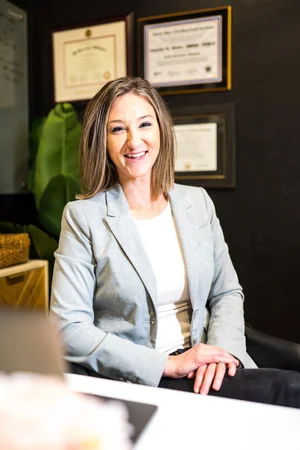
What happens when your lab results are called normal, but you still feel exhausted, struggle with sleep, or notice changes in your body? In episode 159 of The Dr. Haley Show, Dr. Michael Haley talks with Courtney Garner about hormone health, personal experiences of healing, and the role of Christian faith in her approach to care.
Courtney shares her experiences with infertility, restrictive eating and intense exercise, a period of rapid weight gain during severe stress, and the loneliness she later recognized in that season. The conversation also explores lab reference ranges, nutrition, nighttime waking, environmental exposures, and fasting.
About This Episode
Courtney Garner is introduced in the interview as a board-certified Family Nurse Practitioner, founder of WellSpot Functional Medicine and WellSpot IV, and author of Where Faith Meets Medicine: A Woman’s Guide to Health, Hormones, and Longevity. She describes how her personal health experiences and Christian beliefs shaped her work with patients.
This discussion includes personal testimony, clinical observations, and health claims that are not independently established by the interview. Courtney’s experiences are her own and should not be interpreted as a prediction of another person’s results or a reason to delay appropriate care.
Episode Timestamps
These chapter times follow the supplied timecoded transcript, including the recording’s advertising intervals.
00:00 — Opening excerpt: where faith meets medicine
01:06 — Normal labs, ongoing symptoms, and introducing Courtney Garner
02:52 — From Miami to building a practice in Oklahoma
04:24 — Faith, healthcare, and finding a sense of calling
14:08 — Scripture, health, and personal responsibility
17:06 — What Courtney means by emotional toxins
19:29 — Lab reference ranges versus optimal levels
23:42 — Fertility, PCOS, and Courtney’s personal experience
32:08 — Environmental exposures and Courtney’s approach to detoxification
35:59 — Plastics, bottled water, and food processing
40:00 — Rapid weight gain, stress, and loneliness
43:51 — Waking at 2 a.m. and hormone discussions
46:42 — Protein, carbohydrates, fats, and individual preferences
50:24 — Inside Where Faith Meets Medicine
51:49 — Fasting, emotional health, and Courtney’s perspective
55:48 — Where to connect with Courtney
When Normal Lab Results Do Not Explain How You Feel
Courtney describes reviewing symptoms alongside laboratory results rather than treating a reference-range flag as the entire clinical picture. Dr. Haley asks where her preferred “optimal” ranges come from. She identifies professional education, providers’ observations, and some research, while acknowledging that the research is limited for certain targets.
A useful distinction runs through this exchange: a laboratory reference interval, an individual’s symptoms, and a treatment target are different kinds of information. The episode does not establish a universally appropriate optimal range. It also does not provide the studies needed to substantiate the specific progesterone and cancer-risk claim made during the discussion.
Infertility, Exercise, and the Pressure to Be Healthy
Courtney recalls being diagnosed with polycystic ovarian syndrome while training intensely and maintaining very low body fat. Looking back, she wonders whether an unrecognized athlete-triad pattern also contributed to her missing cycles. She describes adding nutrients, allowing herself to gain weight, and later becoming pregnant without fertility treatments.
She interprets that experience through her faith and explicitly recognizes that it is not everyone’s story. Her account cannot isolate which factors contributed to conception. Her separate assertion that each year of birth-control use permanently reduces fertility is not substantiated with a study in this episode and should not be used as a basis for stopping contraception or other prescribed treatment.
Stress, Loneliness, and the Whole-Person Conversation
One of the most personal moments comes when Courtney recounts gaining roughly 15 pounds over ten days to two weeks during a major stressor. She describes anxiety, poor sleep, changes in her thyroid testing, and later realizing she had no close friend with whom she could process what she was experiencing.
Her reflection brings connection and community into the conversation alongside medical evaluation. The speakers also use the phrase “emotional toxins.” Here, that phrase describes their perspective on unresolved emotional distress; it is not a laboratory diagnosis. Their claims about emotions being stored in cells and fasting reversing trauma-related damage are not demonstrated by evidence presented in the interview.
Nighttime Waking, Nutrition, and Hormone Care
When Dr. Haley asks about waking at 2 a.m., Courtney discusses meal timing, alcohol, blood sugar, cortisol, and sex hormones as possibilities she considers. She also explains her preference for bioidentical hormone therapy in selected patients and cautions against using high hormone levels to mask another problem.
The nutrition discussion focuses on protein intake, carbohydrate balance, food quality, and differences in how people feel with different eating patterns. The episode offers Courtney’s clinical perspective rather than a diagnostic method or a nutrition prescription for every listener. Nighttime waking alone does not establish a hormone deficiency or identify its cause.
Environmental Exposures and Questions About Detox
The speakers discuss plastics, heating food in plastic, bottled water, and handling during food production. Dr. Haley shares observations from visits to aloe-processing operations. These examples are part of their discussion of exposure concerns; the episode does not quantify individual exposure or establish the health effect of a particular container or product.
Courtney also discusses binders, antioxidants, sauna use, and medically supervised approaches to heavy metals. She notes that binders can also remove desirable minerals and that specific problems may require testing and supervision. The interview does not establish the efficacy or suitability of these detox approaches for a particular listener.
Faith, Fasting, and Personal Experiences of Healing
Faith is central to this conversation, from Courtney’s account of relief from depression and OCD as a teenager to the way she describes prayer and encouragement in her practice. Dr. Haley also reflects on his own experience of connecting clinical work with spiritual purpose. These are personal religious testimonies, not evidence that another person should expect the same outcome.
Courtney identifies fasting as her favorite chapter in her book and describes her belief that fasting’s cellular effects correspond to damage associated with trauma. She also discusses specific hour-based neurotransmitter benefits, but does not provide supporting studies in the interview. Those claims should not be read as established treatment schedules for depression, anxiety, or trauma. She acknowledges nuances for women and says she does not ask people to move directly into a prolonged fast.